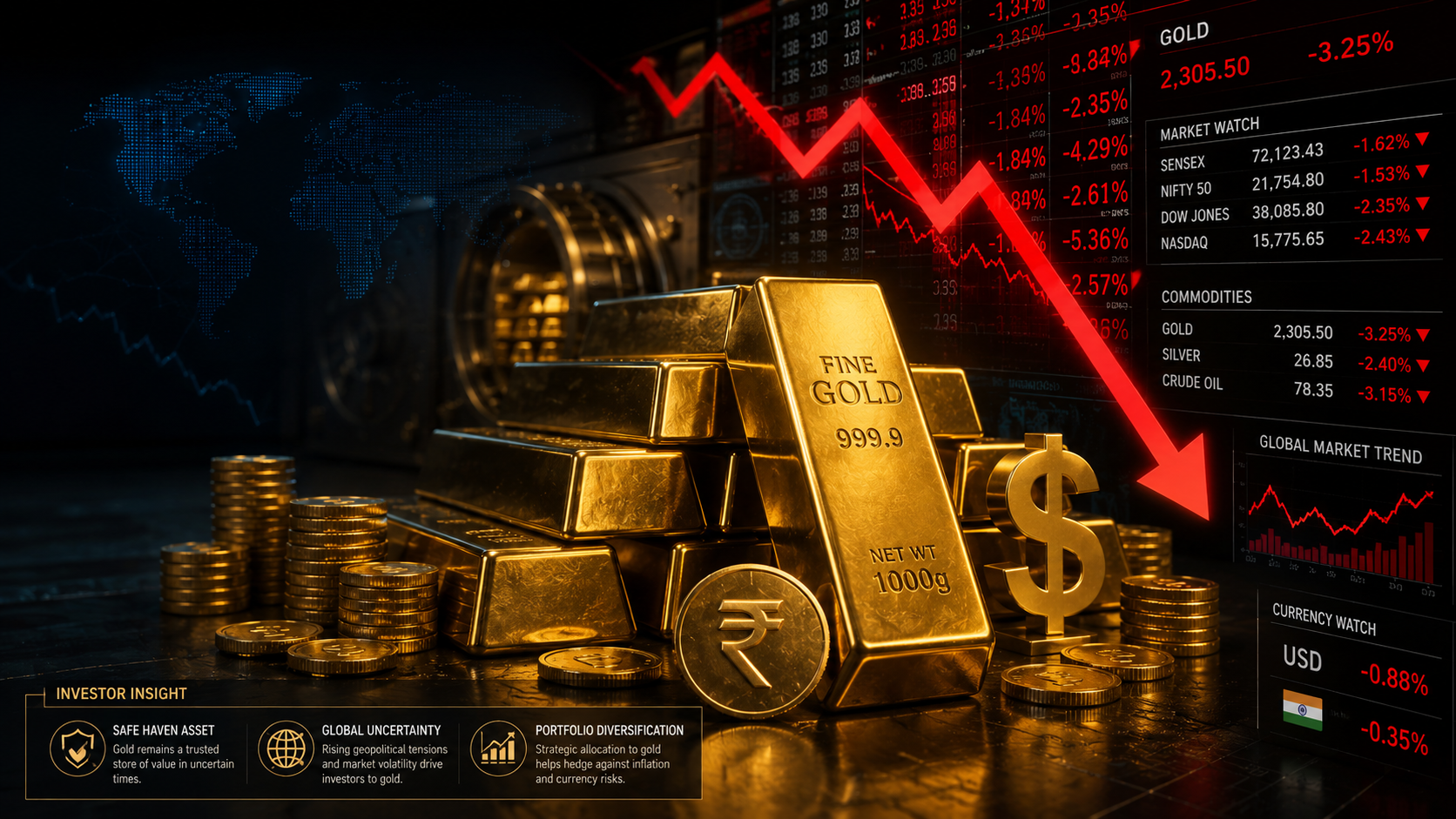
Gold, traditionally regarded as one of the safest investment assets during periods of uncertainty, is witnessing one of its sharpest corrections in nearly two decades. As June 2026 comes to an end, global gold prices are on track to register their biggest monthly decline since October 2008, marking a significant shift in investor sentiment.
The sharp decline comes after months of record-breaking rallies that pushed gold prices to historic highs earlier this year. However, stronger expectations of higher U.S. interest rates, a strengthening U.S. dollar, and easing geopolitical concerns have dramatically changed the outlook for the precious metal.
Why Are Gold Prices Falling?
Several global economic factors have combined to pressure gold prices.
The biggest driver is the expectation that the U.S. Federal Reserve could raise interest rates again to combat persistent inflation. Higher interest rates make interest-bearing assets such as government bonds and fixed-income securities more attractive than non-yielding assets like gold.
At the same time, the U.S. dollar has strengthened significantly against major global currencies. Since gold is priced in dollars, a stronger dollar makes the metal more expensive for international buyers, reducing global demand.
The Biggest Monthly Decline Since 2008
According to market data, gold has declined by more than 11% during June 2026, making it the worst monthly performance since the global financial crisis of 2008.
The metal is also heading for its steepest quarterly decline in over 13 years, highlighting how rapidly investor sentiment has changed after months of optimism.
Market analysts believe the correction reflects changing expectations regarding inflation, monetary policy, and economic growth rather than a collapse in long-term demand.
Impact on Indian Gold Buyers
For Indian consumers, falling international prices are bringing welcome relief.
Gold jewellery prices have declined across major cities, making purchases slightly more affordable for households planning weddings, festivals, or long-term investments.
Retail chains and bullion associations have reported lower prices for 24K, 22K, 20K, and 18K gold, encouraging renewed buying interest after months of exceptionally high rates. Silver prices, however, have shown greater resilience.
What Does This Mean for Investors?
For investors, the correction presents both risks and opportunities.
Those who purchased gold at record highs earlier this year may see short-term losses. However, long-term investors often view price corrections as opportunities to gradually accumulate the precious metal.
Financial advisors generally recommend maintaining a diversified portfolio, with gold serving as a hedge rather than the primary investment. The metal continues to provide protection during periods of financial uncertainty, even though its short-term performance can fluctuate significantly.
Central Banks Continue to Support Gold
Despite weaker prices, many central banks continue to hold substantial gold reserves as part of their foreign exchange portfolios.
Gold remains an important reserve asset because it is independent of any single country’s currency and has historically preserved value during periods of economic instability.
This ongoing institutional demand may help support prices over the longer term despite current market weakness.
Global Markets Shift Toward Risk Assets
Investor preferences have also changed in recent weeks.
Strong performance in technology stocks, artificial intelligence companies, and global equity markets has encouraged investors to move capital away from traditional safe-haven assets like gold.
As confidence in economic growth improves, investors often prefer higher-return investments instead of defensive assets.
This rotation has contributed to the decline in bullion prices across global markets.
What Should Investors Watch Next?
The direction of gold prices over the coming months will depend on several factors:
- U.S. Federal Reserve interest-rate decisions
- Inflation trends in major economies
- Strength of the U.S. dollar
- Global geopolitical developments
- Central bank gold purchases
- Demand during India’s festive and wedding seasons
Any significant changes in these areas could quickly influence bullion prices.
Outlook for India’s Bullion Market
India remains one of the world’s largest consumers of gold.
Lower prices could stimulate jewellery demand during upcoming festivals and wedding seasons. Retail jewellers are already expecting improved footfall if prices remain at current levels.
At the same time, investors are likely to adopt a cautious approach until there is greater clarity regarding global monetary policy.
Conclusion
Gold’s biggest monthly decline since 2008 marks an important turning point for global commodity markets. While rising interest-rate expectations and a stronger dollar have weakened demand in the short term, the precious metal continues to play an important role as a long-term store of value.
For Indian consumers, lower prices offer an opportunity to purchase jewellery and invest at more attractive levels. For investors, the current correction serves as a reminder that diversification remains essential, especially during periods of changing global economic conditions.
Although short-term volatility may continue, gold is expected to remain an important component of investment portfolios and central bank reserves around the world.
Source Links
- Reuters: Gold heads for worst quarter in 13 years on strong dollar, Fed hike bets. https://www.reuters.com/business/gold-set-fourth-monthly-fall-bets-fed-rate-hikes-2026-06-30/
- Reuters (via Yahoo Finance): Gold faces biggest monthly drop since late 2008.
- The Economic Times: Gold rates in India (June 30, 2026).