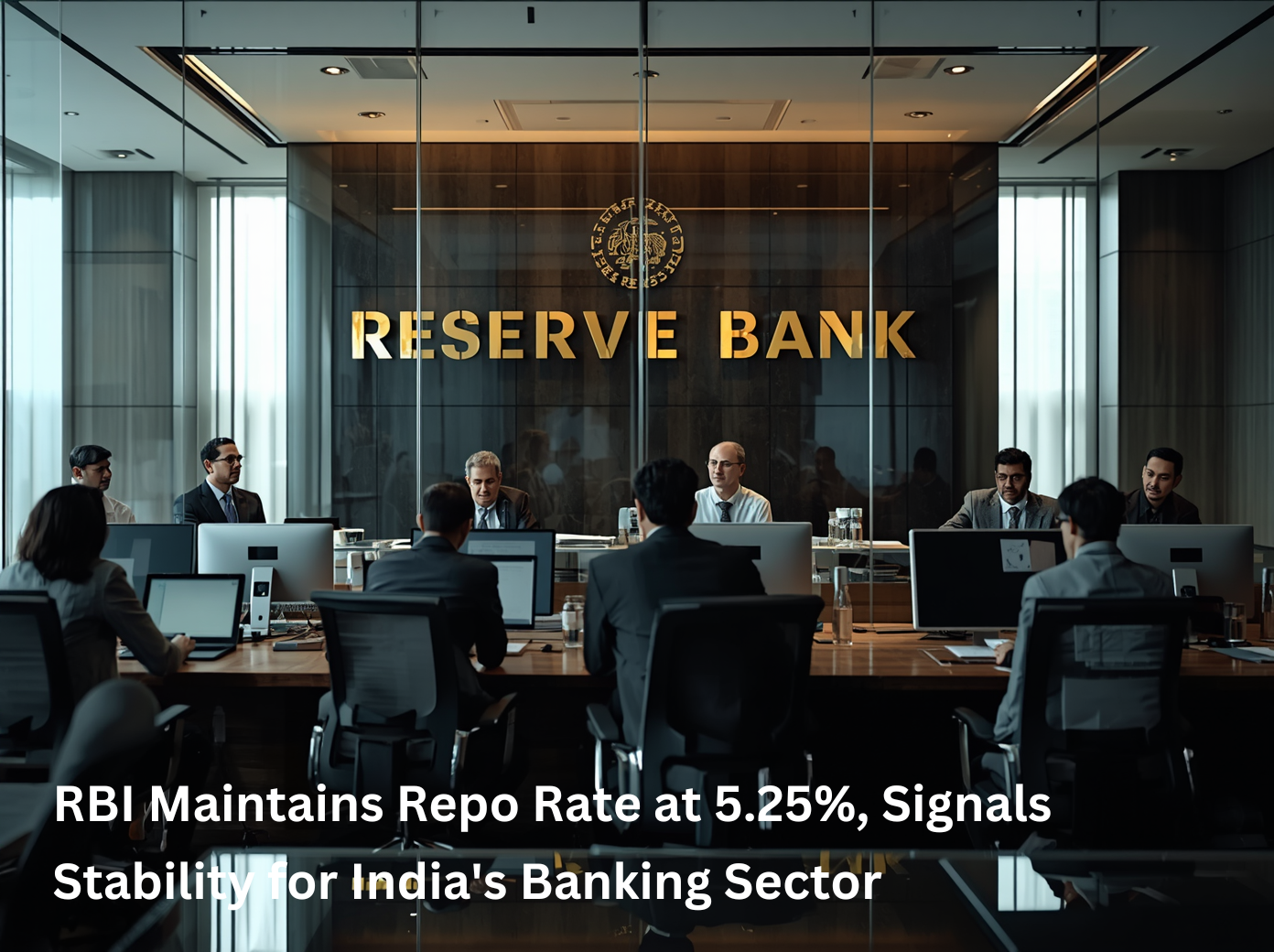
The Reserve Bank of India (RBI) has maintained the repo rate at 5.25%, reinforcing its commitment to supporting economic stability while carefully monitoring inflation and growth trends. The decision has been welcomed by financial markets, businesses, and banking institutions as a sign of confidence in the country’s economic outlook.
The repo rate is one of the most important monetary policy tools used by the RBI. It represents the rate at which commercial banks borrow funds from the central bank. Changes in the repo rate influence borrowing costs, loan interest rates, consumer spending, and overall economic activity.
By keeping the repo rate unchanged, the RBI aims to maintain a balanced approach between controlling inflation and supporting economic growth. Stable interest rates provide predictability for businesses, investors, and consumers, helping them make informed financial decisions.
India’s banking sector has shown remarkable resilience in recent years. Strong credit growth, improved asset quality, increased digital adoption, and enhanced regulatory oversight have strengthened the financial system. Banks continue to play a critical role in supporting infrastructure projects, business expansion, and consumer financing.
Financial experts believe the RBI’s decision reflects confidence in the current economic environment. Inflation levels remain under observation, while economic activity continues to be supported by domestic demand, government investments, and ongoing development initiatives.
The banking industry is also benefiting from rapid digital transformation. Mobile banking, digital payments, artificial intelligence, and fintech partnerships are helping financial institutions improve customer experiences while increasing operational efficiency.
Public and private sector banks have reported healthy lending growth across various segments, including retail loans, housing finance, small business lending, and corporate credit. This growth contributes to economic activity and supports employment generation across multiple sectors.
The stability provided by the RBI’s monetary policy helps maintain investor confidence and supports financial market performance. Predictable policy decisions are particularly important in a global environment where many economies continue to face economic uncertainties and market volatility.
Industry leaders expect the banking sector to remain a key driver of India’s economic growth in 2026. Continued investments in technology, financial inclusion, cybersecurity, and customer-centric services are expected to further strengthen the sector’s contribution to national development.
As India continues its economic growth journey, the RBI’s focus on stability, prudent regulation, and sustainable growth will remain essential in supporting a strong and resilient banking ecosystem capable of meeting the evolving needs of businesses and consumers.
Source: https://www.financialexpress.com/business/banking-finance/