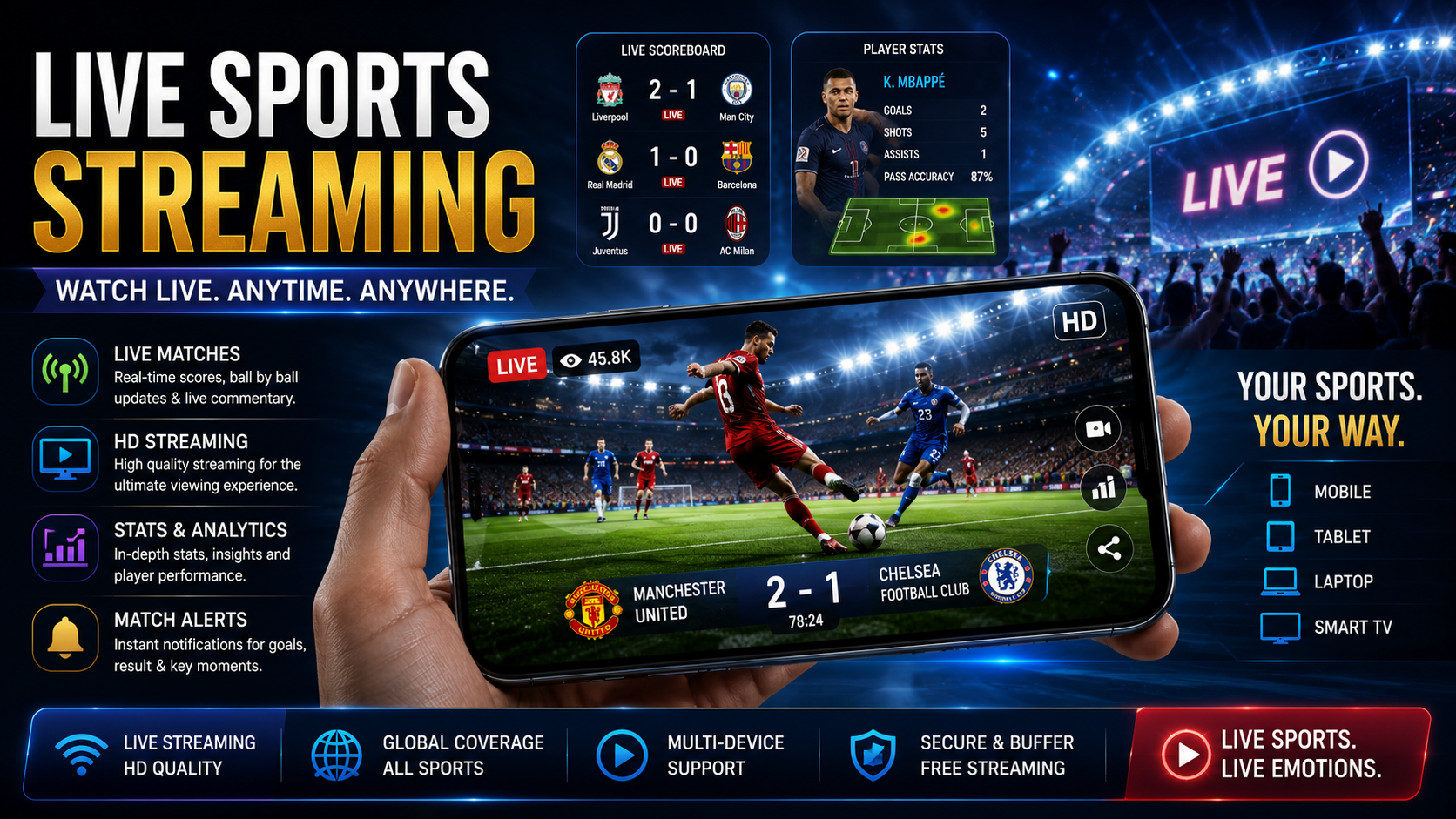
The sports industry has undergone a dramatic transformation over the past decade, largely driven by the rapid growth of digital streaming platforms. Traditional television broadcasting is no longer the only way fans consume sports content. Today, millions of viewers rely on streaming services to watch live matches, highlights, interviews, and behind-the-scenes content.
Sports streaming platforms have made global sporting events more accessible than ever before. Fans can now watch their favorite teams and athletes from anywhere in the world using smartphones, tablets, laptops, and smart televisions. This convenience has significantly increased audience engagement.
Another major advantage of streaming platforms is interactivity. Modern streaming services offer live chats, real-time statistics, multiple camera angles, and personalized viewing experiences. These features allow fans to engage with content beyond simply watching a game.
Social media integration has also strengthened fan engagement. Sports organizations and broadcasters actively share clips, updates, and exclusive content across various platforms, creating continuous interaction between athletes and supporters.
Experts believe that technological innovations such as artificial intelligence, virtual reality, and augmented reality will further enhance sports viewing experiences in the future. These technologies could allow fans to experience matches in immersive environments.
Streaming platforms are also opening new revenue opportunities for sports organizations through subscriptions, advertising, and digital sponsorships. As digital consumption continues to rise, the importance of streaming services is expected to grow even further.
The future of sports entertainment will likely be shaped by innovation, accessibility, and personalized experiences, making digital streaming an essential component of the modern sports ecosystem.
Source: