Meta Description
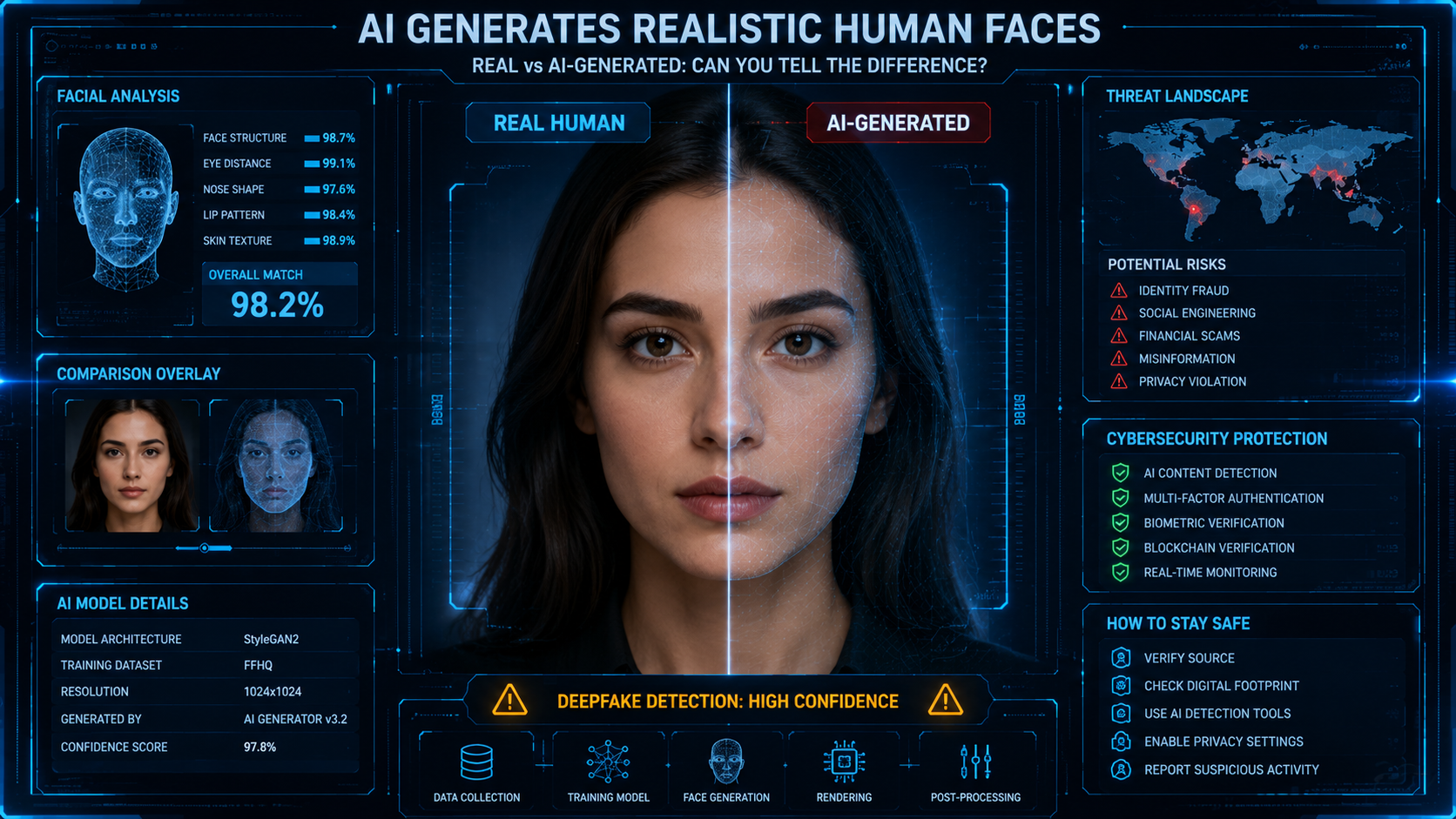
Deepfake technology is becoming more advanced with artificial intelligence. Learn how deepfakes are created, why they are growing rapidly, the risks they pose, and practical ways to identify manipulated content.
Focus Keyword
What is Deepfake Technology
SEO Slug
what-is-deepfake-technology-explained-2026
What Is Deepfake Technology? Understanding How AI-Generated Videos Work, Their Benefits, Risks, and How to Spot Them
Introduction
Artificial intelligence has transformed how people create, edit, and consume digital content. Among its most powerful—and controversial—applications is deepfake technology, which uses advanced AI models to generate realistic images, videos, and audio that can closely imitate real people.
While deepfakes have legitimate uses in filmmaking, education, accessibility, and entertainment, they have also become a growing concern due to their potential misuse in misinformation, scams, identity fraud, and online harassment.
As AI tools become more accessible, understanding how deepfakes work and learning to identify manipulated content has become increasingly important for internet users worldwide.
Key Highlights
- Deepfakes use artificial intelligence to generate realistic images, videos, and voices.
- The technology has applications in entertainment, education, and business.
- Misuse of deepfakes can spread misinformation and enable fraud.
- Governments and technology companies are developing methods to detect AI-generated media.
- Digital literacy plays a key role in identifying manipulated content.
What Is a Deepfake?
A deepfake is a form of synthetic media created using artificial intelligence, particularly deep learning algorithms.
These AI systems analyze thousands of images, videos, or audio recordings of a person to learn facial expressions, voice patterns, and movements. The model can then generate highly realistic content that appears authentic even though it has been artificially created.
The term “deepfake” combines deep learning with fake, reflecting the technology behind the generated content.
How Deepfake Technology Works
Modern deepfakes rely on neural networks that process vast amounts of training data.
The basic process includes:
- Collecting images or videos of the target person.
- Training AI models to recognize facial features and expressions.
- Generating new frames that closely imitate the person’s appearance.
- Synchronizing facial movements with speech or audio.
- Refining the output to improve realism.
Recent advances in generative AI have significantly improved the quality of deepfakes, making them more difficult to distinguish from genuine recordings.
Positive Uses of Deepfakes
Although the term often carries negative associations, deepfake technology has several legitimate applications.
These include:
- Film production and visual effects.
- Language translation with synchronized lip movements.
- Restoring historical footage.
- Educational simulations.
- Accessibility tools for people with disabilities.
- Video game character animation.
Researchers continue exploring ways to use AI-generated media responsibly across creative and professional industries.
Risks Associated With Deepfakes
Despite their benefits, deepfakes also present serious challenges.
Potential risks include:
- Misinformation during elections.
- Financial scams using cloned voices.
- Identity theft.
- Fake celebrity endorsements.
- Cyberbullying and harassment.
- Damage to personal or professional reputations.
Security experts warn that as AI-generated content becomes more realistic, verifying the authenticity of digital media becomes increasingly important.
How to Identify a Deepfake
Although deepfakes continue improving, careful observation can still reveal signs of manipulation.
Some indicators include:
- Unnatural facial movements.
- Inconsistent blinking.
- Lip movements that do not perfectly match speech.
- Irregular lighting or shadows.
- Blurred edges around the face.
- Distorted background details.
- Audio that sounds robotic or inconsistent.
Users should also verify suspicious videos through trusted news organizations or official sources before sharing them.
How Technology Companies Are Responding
Major technology companies are investing in tools to detect AI-generated content.
Current efforts include:
- AI watermarking.
- Content authenticity standards.
- Metadata verification.
- Automated deepfake detection systems.
- Collaboration with academic researchers.
Governments around the world are also considering regulations that require transparency when AI-generated media is used in certain contexts.
Why Digital Literacy Matters
The rapid growth of AI means that technical solutions alone are not enough.
Individuals can protect themselves by:
- Verifying information before sharing.
- Following trusted news sources.
- Being cautious of sensational videos.
- Using reverse image searches where appropriate.
- Checking official statements when content involves public figures or important events.
Building digital literacy helps reduce the spread of misinformation while encouraging responsible online behaviour.
Future of Deepfake Technology
Artificial intelligence continues to evolve rapidly.
Experts expect future developments to include:
- More realistic AI-generated media.
- Improved detection systems.
- Stronger regulations.
- Ethical guidelines for AI content creation.
- Greater public awareness of synthetic media.
The long-term impact of deepfakes will depend largely on how governments, technology companies, creators, and users balance innovation with responsible use.
Conclusion
Deepfake technology demonstrates both the remarkable capabilities and the complex challenges of modern artificial intelligence. While it offers exciting opportunities across entertainment, education, and accessibility, it also highlights the importance of responsible innovation and informed digital citizenship.
As AI-generated media becomes increasingly common, developing the ability to critically evaluate online content will remain one of the most valuable digital skills for individuals and organizations alike.
Frequently Asked Questions
What is a deepfake?
A deepfake is AI-generated media that realistically imitates a person’s appearance or voice using deep learning technology.
Are all deepfakes harmful?
No. Deepfakes have legitimate applications in filmmaking, education, accessibility, and creative industries, although they can also be misused.
How can I verify whether a video is a deepfake?
Compare it with trusted news reports, official sources, or fact-checking organizations, and look for visual or audio inconsistencies.
Source Links
- UNESCO – Artificial Intelligence and Digital Literacy
- National Cyber Security Centre (NCSC)
- World Economic Forum – Artificial Intelligence
- MIT Technology Review – AI and Deepfake Research