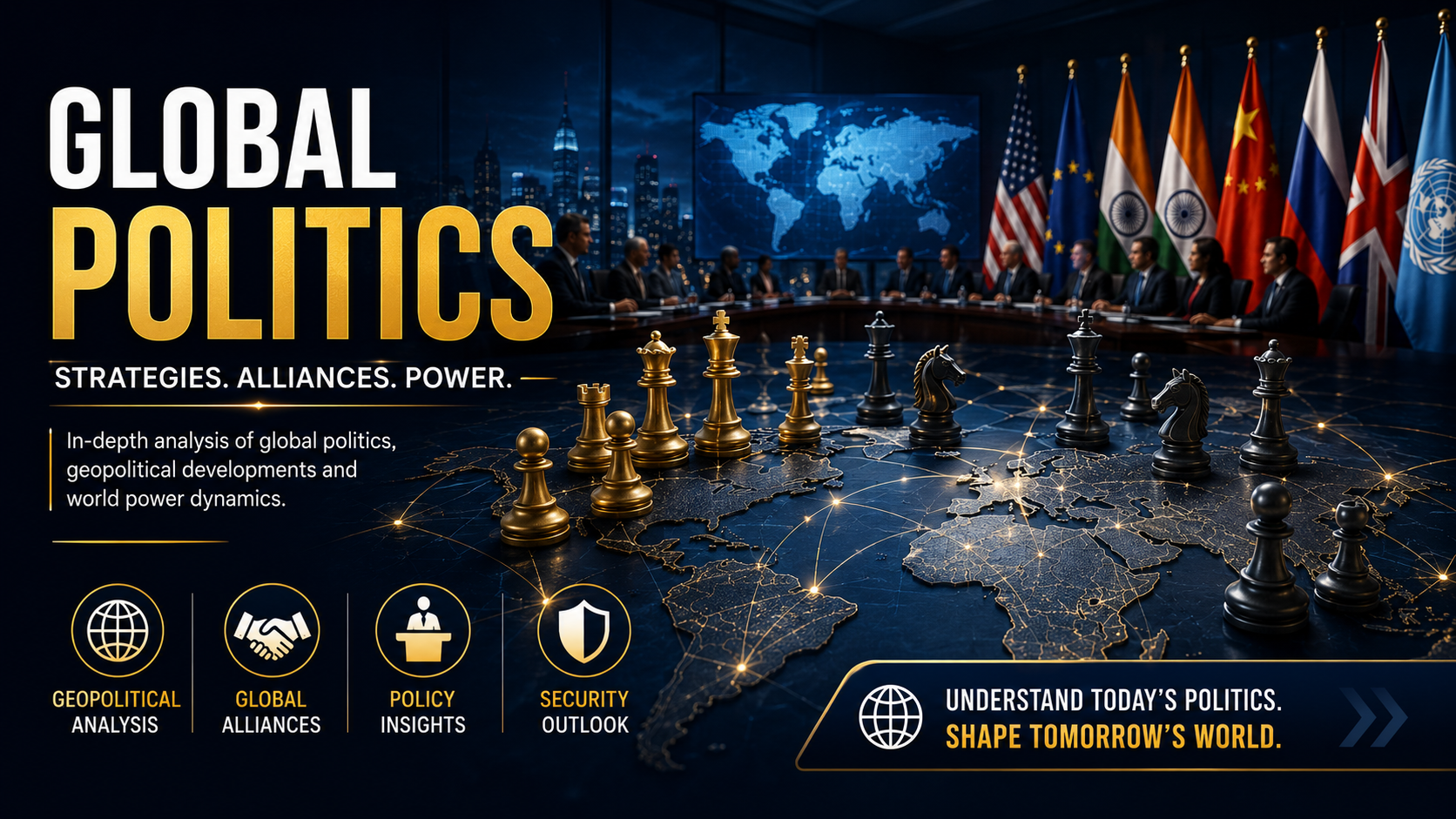
The global political landscape is undergoing a significant transformation as nations increasingly move toward a multipolar world order. Unlike the traditional dominance of a few global powers, the modern geopolitical environment is witnessing the emergence of multiple influential nations.
Countries across Asia, Europe, Africa, and Latin America are strengthening bilateral and multilateral relationships based on economic, strategic, and technological interests. This shift has encouraged governments to pursue independent foreign policies while maintaining balanced diplomatic ties.
Experts believe that the rise of multipolar politics offers both opportunities and challenges. On one hand, it promotes greater international cooperation and diversified partnerships. On the other, it can create geopolitical competition and strategic uncertainties.
Economic diplomacy has become one of the key drivers of this transformation. Trade agreements, infrastructure investments, and technological collaborations are increasingly shaping international relationships.
Nations are also focusing on strengthening regional organizations and strategic partnerships to enhance their global influence. Organizations such as BRICS, G20, and regional economic blocs are playing increasingly important roles.
Analysts suggest that the future of global politics will depend on how nations manage competition while maintaining cooperation on critical issues such as climate change, global health, and economic stability.
As international dynamics continue to evolve, multipolar politics is expected to redefine global governance and international relations in the coming years.
Source: