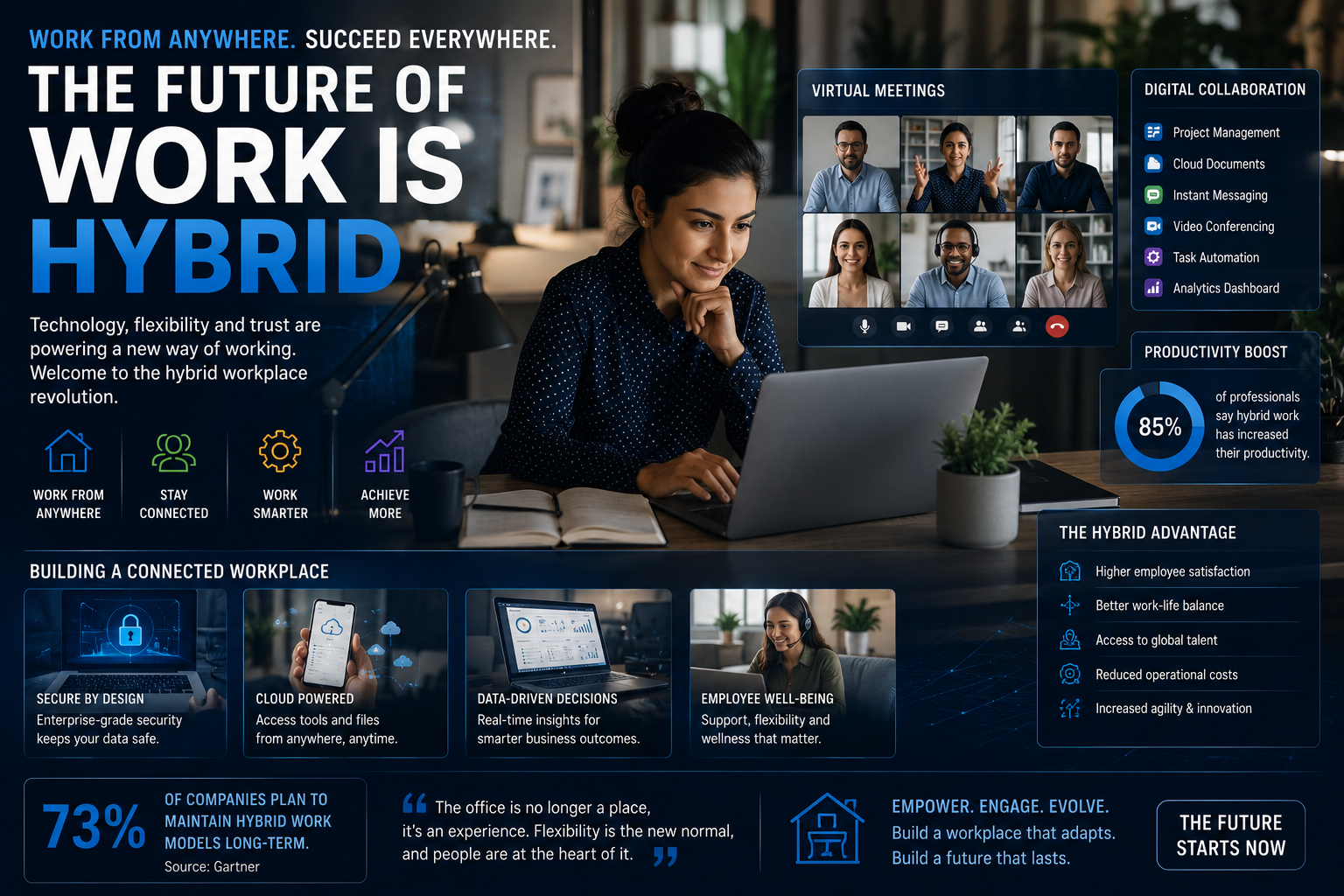
Remote work has fundamentally transformed the global workplace, and in 2026, organizations continue to adapt to new working models that prioritize flexibility, productivity, and employee well-being.
Following widespread digital transformation, businesses across industries have increasingly adopted hybrid work arrangements that combine remote and in-office work. This approach allows organizations to maintain operational efficiency while offering employees greater flexibility.
Technology remains at the center of this transformation. Video conferencing platforms, cloud computing solutions, project management software, and collaboration tools have become essential components of modern workplaces.
Experts believe that flexible work arrangements offer numerous benefits, including improved work-life balance, reduced commuting time, and increased access to global talent pools. Companies are also leveraging remote work models to optimize operational costs.
However, remote work presents several challenges. Maintaining team collaboration, ensuring cybersecurity, preserving organizational culture, and preventing employee burnout remain key concerns for employers.
Organizations are increasingly investing in digital infrastructure, employee wellness initiatives, and leadership development programs to address these challenges effectively.
As workplace expectations continue to evolve, the future is likely to witness greater adoption of hybrid work models supported by advanced technologies such as Artificial Intelligence, virtual collaboration environments, and automation.
The future of work will ultimately depend on organizations’ ability to balance flexibility, productivity, and employee engagement.
Source:
Global Workplace and Future of Work Industry Reports