How India’s Digital Public Infrastructure Is Transforming Everyday Life in 2026
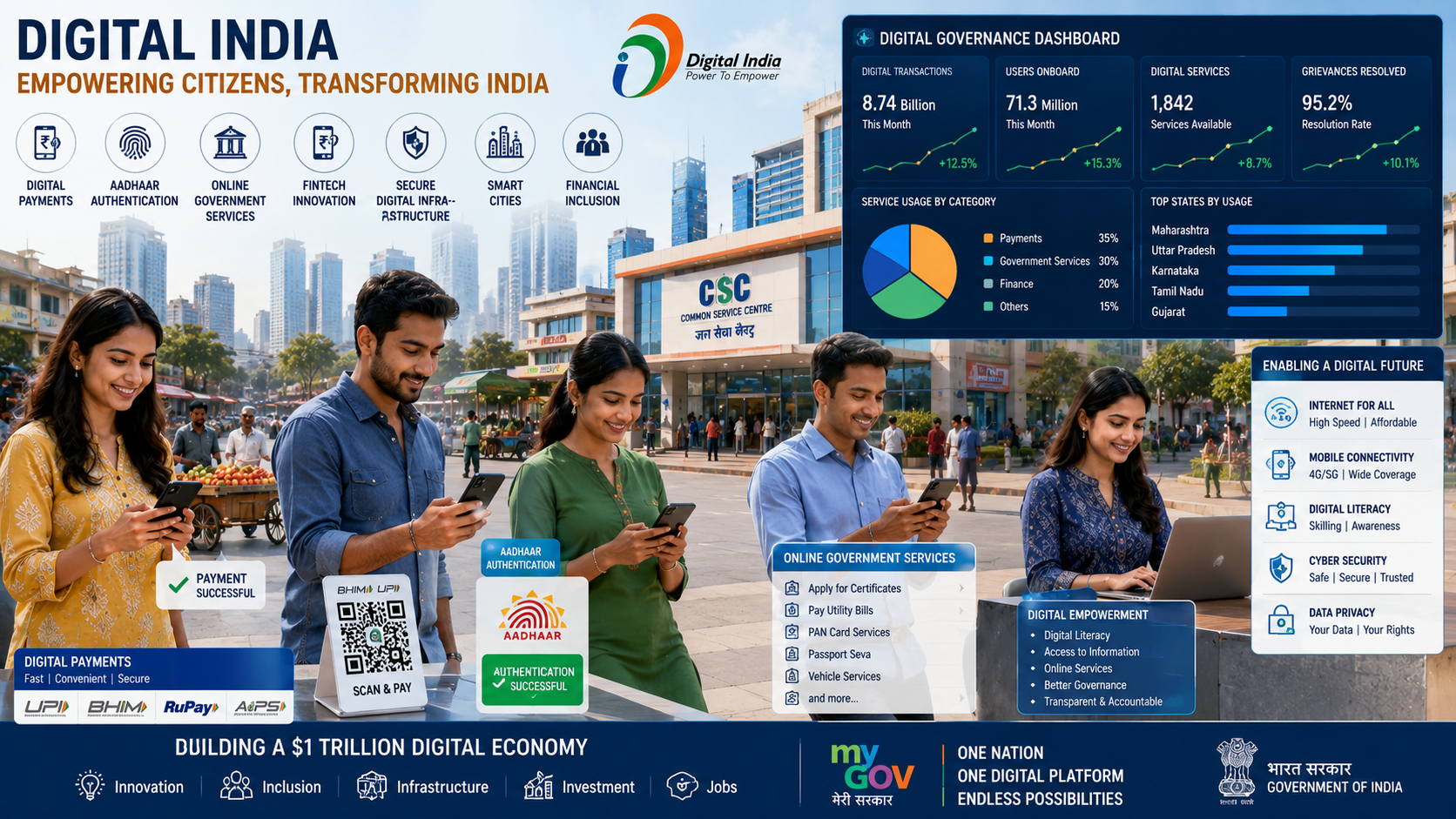
India’s digital transformation has become one of the country’s biggest success stories. Over the last decade, technology has fundamentally changed how people access financial services, government benefits, healthcare, education, and everyday transactions. In 2026, Digital Public Infrastructure (DPI) continues to serve as the backbone of this transformation, helping millions of citizens connect with essential services more efficiently.
Digital Public Infrastructure refers to the digital systems that enable secure identity verification, digital payments, document sharing, and online public services. Together, these platforms have simplified processes that once required lengthy paperwork and multiple office visits.
Digital Payments Become the New Normal
One of the most visible examples of India’s digital revolution is the widespread adoption of digital payments. Small businesses, street vendors, supermarkets, restaurants, and service providers now accept instant digital transactions.
Consumers benefit from:
- Faster payments
- Secure transactions
- Reduced dependence on cash
- Easy transaction records
- Greater financial inclusion
This digital payment ecosystem has made financial services more accessible across urban and rural India.
Government Services at Your Fingertips
Many government services are now available online, reducing paperwork and saving citizens valuable time.
People can access services such as:
- Identity verification
- Income tax filing
- Passport applications
- Utility bill payments
- Scholarship applications
- Pension services
- Digital certificates
Online platforms have improved transparency while making public services easier to access.
Healthcare Goes Digital
Technology is also improving healthcare delivery.
Patients can now:
- Book appointments online
- Store digital health records
- Consult doctors remotely through telemedicine
- Receive prescription reminders
- Access healthcare information using mobile applications
Digital healthcare solutions have expanded access, especially for people living in remote areas.
Education in the Digital Era
Schools, colleges, and universities increasingly use digital learning platforms to deliver lectures, assignments, examinations, and study materials.
Students benefit from:
- Online learning resources
- Interactive classrooms
- Recorded lectures
- Skill development courses
- Digital certifications
Technology has made quality educational content more accessible than ever before.
Opportunities for Businesses
Digital infrastructure has also supported entrepreneurs and startups.
Small businesses can now:
- Accept digital payments
- Sell products online
- Access business loans
- Manage inventory digitally
- Reach customers nationwide through e-commerce
These developments have encouraged innovation while helping businesses grow more efficiently.
Challenges That Remain
Despite significant progress, several challenges continue to require attention.
These include:
- Cybersecurity threats
- Digital literacy gaps
- Internet connectivity in remote regions
- Online fraud prevention
- Protection of personal data
Addressing these issues will help ensure that digital transformation benefits everyone safely and inclusively.
Looking Ahead
India’s Digital Public Infrastructure demonstrates how technology can improve governance, financial inclusion, healthcare, education, and entrepreneurship. Continued investment in digital infrastructure, cybersecurity, and digital literacy will play a key role in shaping the country’s future.
As digital adoption continues to expand, India is well positioned to build a more connected, efficient, and inclusive digital economy.