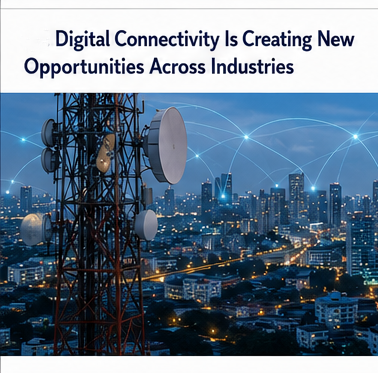
Digital connectivity has become one of the most important drivers of economic growth and innovation in the modern world. The rapid expansion of internet access, mobile networks, cloud technologies, and digital platforms is transforming industries, creating new business opportunities, and improving access to services for millions of people worldwide.
Over the past decade, advancements in digital infrastructure have significantly changed how businesses operate and how consumers interact with products and services. High-speed internet, 5G networks, fiber-optic connectivity, and cloud computing solutions are enabling organizations to improve efficiency, expand their reach, and accelerate innovation.
One of the most visible impacts of digital connectivity is the growth of the digital economy. E-commerce platforms, online marketplaces, digital payments, and financial technology solutions have revolutionized the way businesses and consumers conduct transactions. Small and medium-sized enterprises now have greater access to national and global markets through digital channels.
The financial sector has particularly benefited from improved connectivity. Digital banking, mobile payment systems, and fintech innovations are increasing financial inclusion and making banking services more accessible to individuals and businesses. Millions of people can now manage financial transactions conveniently through smartphones and digital platforms.
Healthcare services are also being transformed by digital connectivity. Telemedicine, remote consultations, electronic health records, and digital health applications are improving access to healthcare, particularly in remote and underserved regions. These innovations help healthcare providers deliver services more efficiently while improving patient outcomes.
Education has become more accessible through digital learning platforms and online educational resources. Students can access courses, training programs, and learning materials from anywhere in the world, helping bridge educational gaps and support lifelong learning opportunities.
Manufacturing and industrial sectors are increasingly adopting connected technologies as part of Industry 4.0 initiatives. Smart factories, connected devices, and real-time data analytics are helping businesses optimize production processes, reduce costs, and improve productivity.
Digital connectivity is also supporting entrepreneurship and innovation. Startups and technology companies can leverage cloud-based tools, digital marketing platforms, and online collaboration technologies to launch and scale businesses more effectively. This creates new opportunities for economic growth and job creation.
Governments around the world are investing in digital infrastructure to support economic development and improve public services. Digital governance initiatives, online citizen services, and smart city projects are enhancing efficiency, transparency, and accessibility.
Despite the significant benefits, challenges such as digital inclusion, cybersecurity, and infrastructure development remain important priorities. Ensuring that individuals and communities have access to reliable connectivity is essential for maximizing the benefits of digital transformation.
Experts believe that digital connectivity will continue to play a central role in shaping the future of industries and economies. As technology evolves, connected systems and digital platforms are expected to create even more opportunities for innovation, collaboration, and sustainable growth.
The expansion of digital connectivity represents a major step toward a more connected and inclusive global economy. By enabling access to information, services, and opportunities, digital technologies are helping create a future where innovation and economic participation are available to a broader population.
Source Link:
https://www.itu.int/
https://www.worldbank.org/en/topic/digitaldevelopment