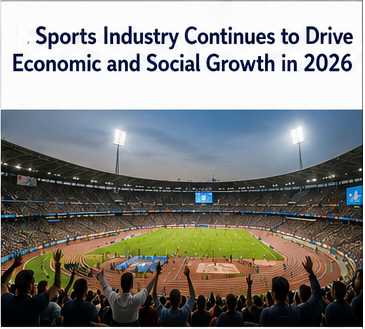
The global sports industry continues to expand in 2026, contributing significantly to economic growth, employment generation, tourism, and community development. From professional leagues and international tournaments to grassroots participation and digital sports platforms, the sector has become an important driver of both economic and social progress.
Sports have evolved beyond competition and entertainment. Today, they represent a major global industry generating billions of dollars through broadcasting rights, sponsorships, merchandise sales, event management, tourism, and digital engagement. Countries around the world are increasingly investing in sports infrastructure and athlete development to capitalize on these opportunities.
One of the key contributors to the industry’s growth is the rising popularity of international sporting events. Major tournaments attract millions of viewers globally, creating opportunities for businesses, sponsors, broadcasters, and host cities. These events stimulate local economies through tourism, hospitality, transportation, and retail spending.
The sports sector also plays an important role in job creation. Opportunities exist across coaching, sports management, marketing, broadcasting, fitness training, event operations, technology services, and infrastructure development. As the industry grows, demand for skilled professionals continues to increase.
Technology is transforming the sports experience for athletes, teams, and fans. Advanced analytics, wearable devices, artificial intelligence, and digital broadcasting solutions are helping improve performance, enhance fan engagement, and create new revenue streams. Sports organizations are increasingly adopting innovative technologies to remain competitive and connected with global audiences.
Youth participation in sports remains a key focus for governments and educational institutions. Regular physical activity contributes to improved health, teamwork, discipline, and leadership skills. Investments in sports facilities and training programs help nurture future talent while encouraging healthier lifestyles.
Women’s sports continue to experience remarkable growth worldwide. Increased visibility, sponsorship support, and audience interest are creating new opportunities for female athletes and expanding the reach of professional sports. Many organizations are investing in initiatives aimed at promoting inclusivity and equal opportunities.
Sports tourism has emerged as another significant contributor to economic development. Fans travel across countries and continents to attend major events, generating revenue for hotels, restaurants, transportation providers, and local businesses. Host cities often benefit from enhanced international visibility and long-term infrastructure improvements.
Environmental sustainability is also becoming a priority within the sports industry. Event organizers and sports organizations are adopting eco-friendly practices, reducing waste, and investing in sustainable infrastructure to minimize environmental impact.
Industry experts believe that the sports sector will continue to play an important role in global development by fostering economic growth, promoting social inclusion, and encouraging healthy lifestyles. As investments in technology, infrastructure, and talent development increase, the industry’s influence is expected to grow even further.
The continued expansion of the sports industry demonstrates its ability to create opportunities that extend beyond the playing field, contributing to both economic prosperity and societal well-being in communities around the world.
Source Link:
https://olympics.com/ioc