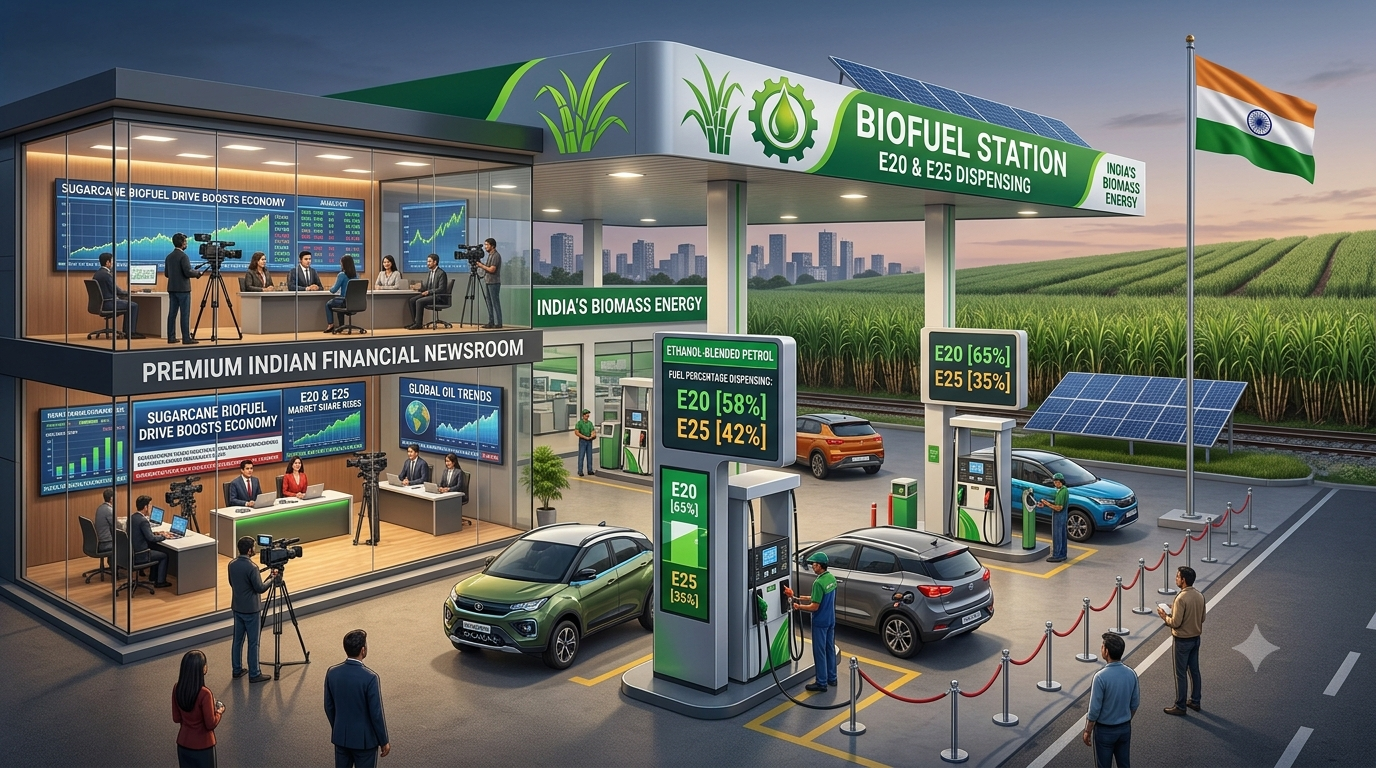
Meta Description: The Government of India is reviewing the rollout of E25 ethanol-blended petrol, opting for a phased implementation while assessing vehicle compatibility, consumer concerns, and fuel efficiency.
Focus Keyword: E25 Petrol Rollout India 2026
SEO Slug: india-e25-petrol-rollout-phased-approach-2026
India Reviews E25 Petrol Rollout as Government Adopts Phased Approach After E20 Transition
Introduction
After successfully achieving its nationwide 20% ethanol blending (E20) target ahead of schedule, the Government of India is now taking a cautious approach toward the next milestone—E25 petrol. Officials are reviewing vehicle compatibility, fuel efficiency, consumer feedback, and infrastructure readiness before moving ahead with a wider rollout. Rather than introducing E25 immediately across the country, the government is expected to implement it in phases. (Moneycontrol)
The review reflects the government’s effort to balance its clean-energy goals with practical concerns raised by motorists, automakers, and industry stakeholders.
Key Highlights
- India has already achieved the nationwide E20 blending target ahead of the original schedule.
- The proposed E25 rollout is likely to be implemented gradually.
- Authorities are assessing mileage, vehicle compatibility, and consumer experience.
- The ethanol programme remains central to India’s energy security strategy. (Moneycontrol)
Why Is the Government Slowing the E25 Rollout?
The move comes after feedback from consumers and technical evaluations following the nationwide adoption of E20 fuel.
Officials are reviewing:
- Fuel efficiency in different vehicle models.
- Compatibility with older vehicles.
- Long-term engine performance.
- Availability of ethanol supplies.
- Readiness of fuel distribution infrastructure. (Moneycontrol)
A phased rollout allows policymakers to address these issues before introducing higher ethanol blends nationwide.
India’s Ethanol Blending Journey
India’s ethanol programme has expanded rapidly over the past decade.
Major achievements include:
- Ethanol blending increased from less than 1.5% in 2013–14 to 20% in 2025–26.
- Domestic ethanol production capacity has expanded significantly.
- Oil imports have been reduced through greater use of biofuels.
- Farmers have benefited from increased demand for sugarcane and grain-based feedstocks. (Press Information Bureau)
The programme is considered one of India’s flagship clean-energy initiatives.
Benefits of Ethanol-Blended Fuel
Higher ethanol blending offers several long-term advantages:
- Reduced dependence on imported crude oil.
- Lower greenhouse gas emissions.
- Improved energy security.
- Additional income opportunities for farmers.
- Growth in the domestic biofuel industry. (Press Information Bureau)
These benefits remain the primary drivers behind India’s biofuel policy.
Consumer Concerns
While newer vehicles are generally designed to operate on E20 fuel, some motorists have raised concerns regarding:
- Reduced mileage.
- Compatibility with older engines.
- Potential maintenance costs.
- Fuel economy during long-distance travel. (The Economic Times)
Government agencies and automobile manufacturers continue to evaluate these issues while communicating technical guidance to consumers.
Industry Outlook
Industry experts expect India’s ethanol programme to continue expanding over the coming years.
Future developments may include:
- Wider adoption of flex-fuel vehicles.
- Expansion of ethanol production capacity.
- Investment in advanced biofuels.
- Improved fuel distribution infrastructure.
- Gradual introduction of higher ethanol blends where appropriate. (Press Information Bureau)
Conclusion
India’s decision to adopt a phased approach toward E25 petrol highlights its effort to balance sustainability with consumer confidence. Having already achieved the E20 milestone ahead of schedule, the government is focusing on technical readiness and public acceptance before moving to higher ethanol blends. If implemented successfully, the next phase could further strengthen India’s energy security while supporting cleaner transportation. (Moneycontrol)
Frequently Asked Questions
What is E25 petrol?
E25 petrol is fuel containing 25% ethanol and 75% petrol, intended to further reduce fossil fuel dependence.
Why is the government delaying E25?
Officials are reviewing vehicle compatibility, mileage, infrastructure readiness, and consumer feedback before implementing a nationwide rollout. (Moneycontrol)
Has India achieved the E20 target?
Yes. India achieved 20% ethanol blending ahead of the original timeline under the Ethanol Blended Petrol Programme. (Press Information Bureau)
Source Links
- https://www.moneycontrol.com/news/business/govt-likely-to-roll-out-e25-petrol-in-calculated-manner-assessing-impact-on-mileage-vehicle-performance-13968042.html
- https://www.pib.gov.in/FactsheetDetails.aspx?ModuleId=16&NoteId=150699&id=150699&lang=1®=3
- https://m.economictimes.com/industry/auto/auto-news/e20-fuel-may-affect-turbocharged-engines-damage-rubber-fuel-system-parts-in-older-vehicles-no-issues-found-in-two-wheelers-arai-report/articleshow/132230693.cms