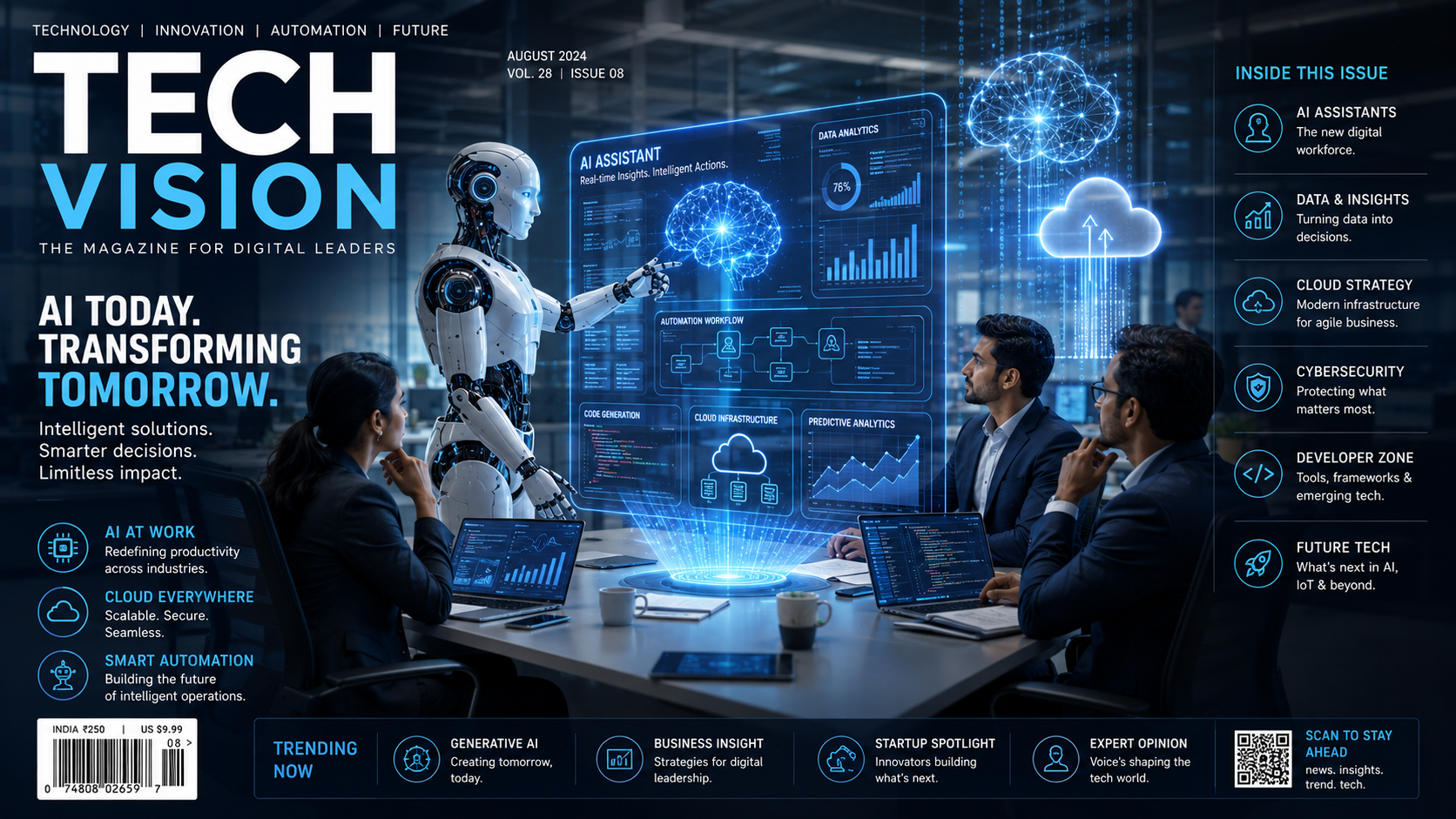
Artificial Intelligence (AI) is rapidly transforming how organizations operate, and businesses worldwide are increasingly integrating AI-powered tools into their daily workflows. From customer support and software development to marketing, finance, and research, AI is becoming an essential productivity partner.
The latest developments in enterprise AI highlight a growing trend: organizations are moving beyond experimentation and adopting AI as a core business technology. Companies are investing heavily in intelligent assistants, workflow automation, document analysis, coding support, and data-driven decision-making to improve efficiency while reducing operational costs.
As one of the leading AI companies, OpenAI continues to introduce new capabilities for enterprise customers, enabling businesses to securely deploy generative AI across departments while maintaining governance, privacy, and compliance.
AI Moves from Experimentation to Everyday Business
Over the past two years, AI adoption has accelerated dramatically.
Initially used primarily for content generation and coding assistance, AI platforms are now supporting mission-critical business operations.
Organizations are deploying AI to:
- Draft business documents
- Analyze large datasets
- Generate software code
- Automate customer service
- Summarize meetings
- Support HR recruitment
- Improve financial reporting
- Enhance marketing campaigns
This transition reflects growing confidence in AI’s ability to increase productivity while allowing employees to focus on higher-value work.
Enterprise Adoption Continues to Grow
Large enterprises across banking, healthcare, manufacturing, retail, education, and professional services are expanding AI deployments.
Key drivers include:
- Faster decision-making
- Improved operational efficiency
- Cost optimization
- Better customer experiences
- Increased employee productivity
- Automation of repetitive tasks
Many organizations now view AI as a long-term strategic investment rather than a temporary technology trend.
Security and Privacy Become Priorities
As AI adoption expands, businesses are placing greater emphasis on security, privacy, and responsible AI governance.
Enterprise AI platforms increasingly offer:
- Data encryption
- Role-based access controls
- Compliance management
- Audit logs
- Administrative controls
- Secure deployment options
These capabilities help organizations adopt AI while protecting sensitive corporate information.
AI Is Transforming Multiple Industries
Generative AI is influencing nearly every major industry.
Healthcare providers use AI for clinical documentation and medical research.
Financial institutions automate fraud detection and customer support.
Manufacturers improve quality control using computer vision.
Retail companies personalize customer experiences.
Educational institutions create adaptive learning environments.
Marketing teams accelerate content creation and campaign optimization.
This widespread adoption demonstrates AI’s versatility across sectors.
The Future of Work
Experts believe AI will reshape the nature of work rather than simply replace jobs.
Employees are increasingly collaborating with AI systems to improve productivity, creativity, and decision-making.
Organizations are investing in AI training programs to help workers develop new digital skills that complement intelligent technologies.
Human expertise, creativity, strategic thinking, and problem-solving remain essential despite growing automation.
Challenges Remain
Despite rapid progress, enterprise AI adoption still faces challenges.
Organizations continue working to address:
- Data privacy
- AI bias
- Regulatory compliance
- Employee training
- Integration with legacy systems
- Responsible AI governance
Successfully managing these issues will determine how effectively businesses realize AI’s long-term benefits.
AI Investment Continues to Increase
Global spending on Artificial Intelligence continues to rise as organizations compete to modernize operations.
Technology companies are investing billions of dollars in AI infrastructure, cloud computing, semiconductors, and advanced language models.
This investment is expected to accelerate innovation while making AI increasingly accessible to businesses of all sizes.
Looking Ahead
Industry analysts expect enterprise AI adoption to expand significantly over the next five years.
Future developments may include:
- Autonomous business workflows
- AI-powered research assistants
- Advanced reasoning systems
- Personalized enterprise copilots
- Intelligent robotics
- Multi-modal AI applications
Businesses that successfully integrate AI into their operations are likely to gain significant competitive advantages.
Conclusion
Enterprise Artificial Intelligence is entering a new stage of maturity.
Rather than serving as a standalone productivity tool, AI is becoming integrated into every aspect of business operations.
As organizations continue investing in secure, responsible, and scalable AI solutions, workplace automation is expected to improve efficiency, accelerate innovation, and reshape how businesses operate in the digital economy.
The growing adoption of enterprise AI demonstrates that intelligent automation is no longer a future possibility—it is becoming a fundamental component of modern business strategy.
Source Links
- OpenAI Newsroom: https://openai.com/news/
- Reuters Technology: https://www.reuters.com/technology/
- Gartner AI Research: https://www.gartner.com/