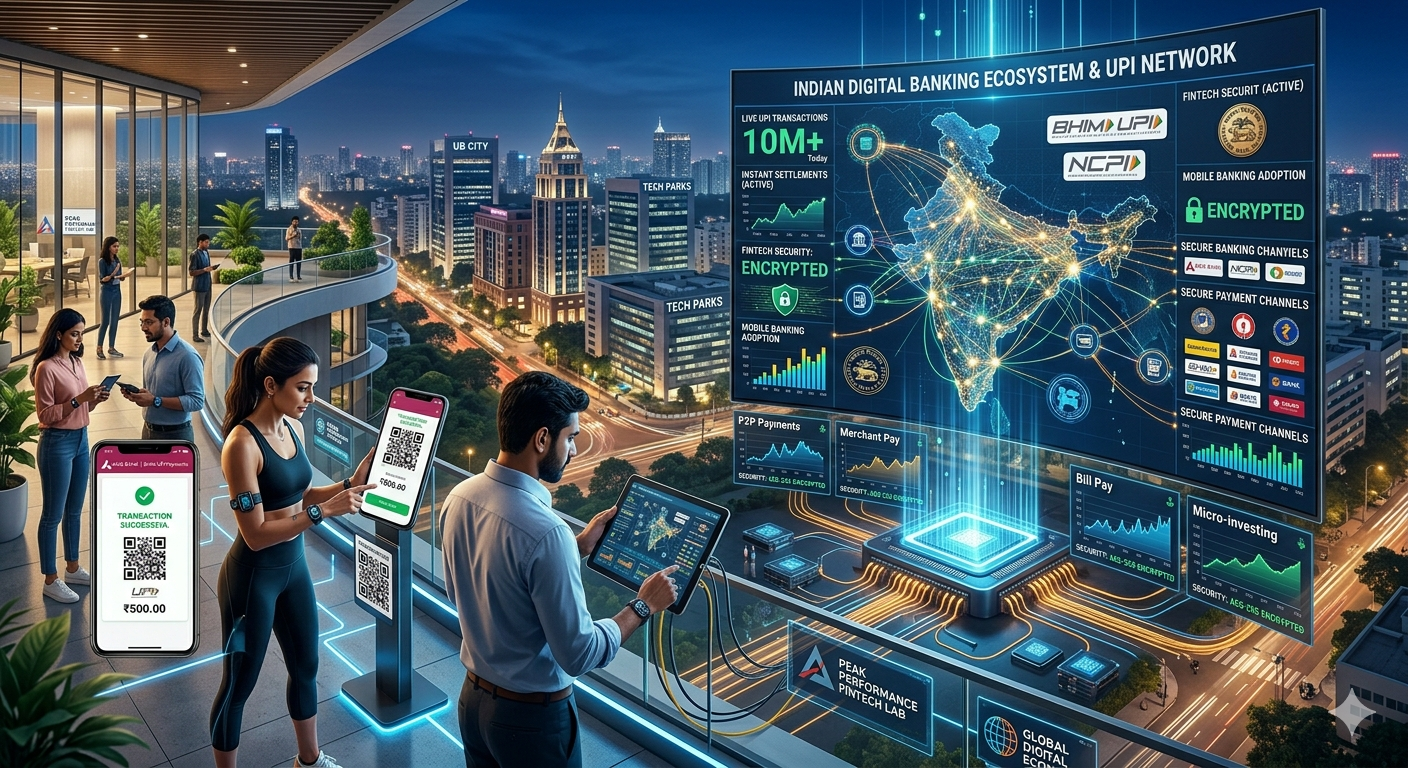
India’s banking sector is undergoing a major transformation as digital banking adoption reaches new heights in 2026. Driven by smartphone penetration, internet accessibility, and innovative fintech solutions, digital banking has become an essential part of daily financial activities.
Consumers are increasingly relying on mobile applications and online platforms for transactions, account management, fund transfers, and bill payments. The convenience and speed offered by digital banking services have significantly improved customer experiences across urban and rural regions.
One of the biggest contributors to this growth is the Unified Payments Interface (UPI). The platform has revolutionized digital payments by enabling instant and secure transactions between bank accounts. Millions of Indians now use UPI for personal and business transactions on a daily basis.
Banks are also investing heavily in digital infrastructure. Artificial intelligence, automation, and advanced security systems are helping financial institutions provide more efficient services while reducing operational costs.
Financial inclusion has improved substantially through digital banking initiatives. Individuals in remote areas now have access to banking services that were previously difficult to obtain. Mobile banking applications allow users to open accounts, transfer money, and access financial products without visiting physical branches.
Cybersecurity remains a key focus area as digital transactions continue increasing. Banks are implementing advanced fraud detection systems and customer awareness programs to ensure secure financial operations.
The rise of fintech companies has further accelerated innovation. Collaborations between banks and fintech startups are introducing new products and services that address evolving consumer needs.
Experts believe digital banking will continue driving financial sector growth in India as technology adoption expands and customer expectations evolve.
Conclusion
Digital banking is transforming India’s financial ecosystem by making banking services more accessible, efficient, and convenient. Continued innovation and investment will further strengthen the country’s digital financial infrastructure.