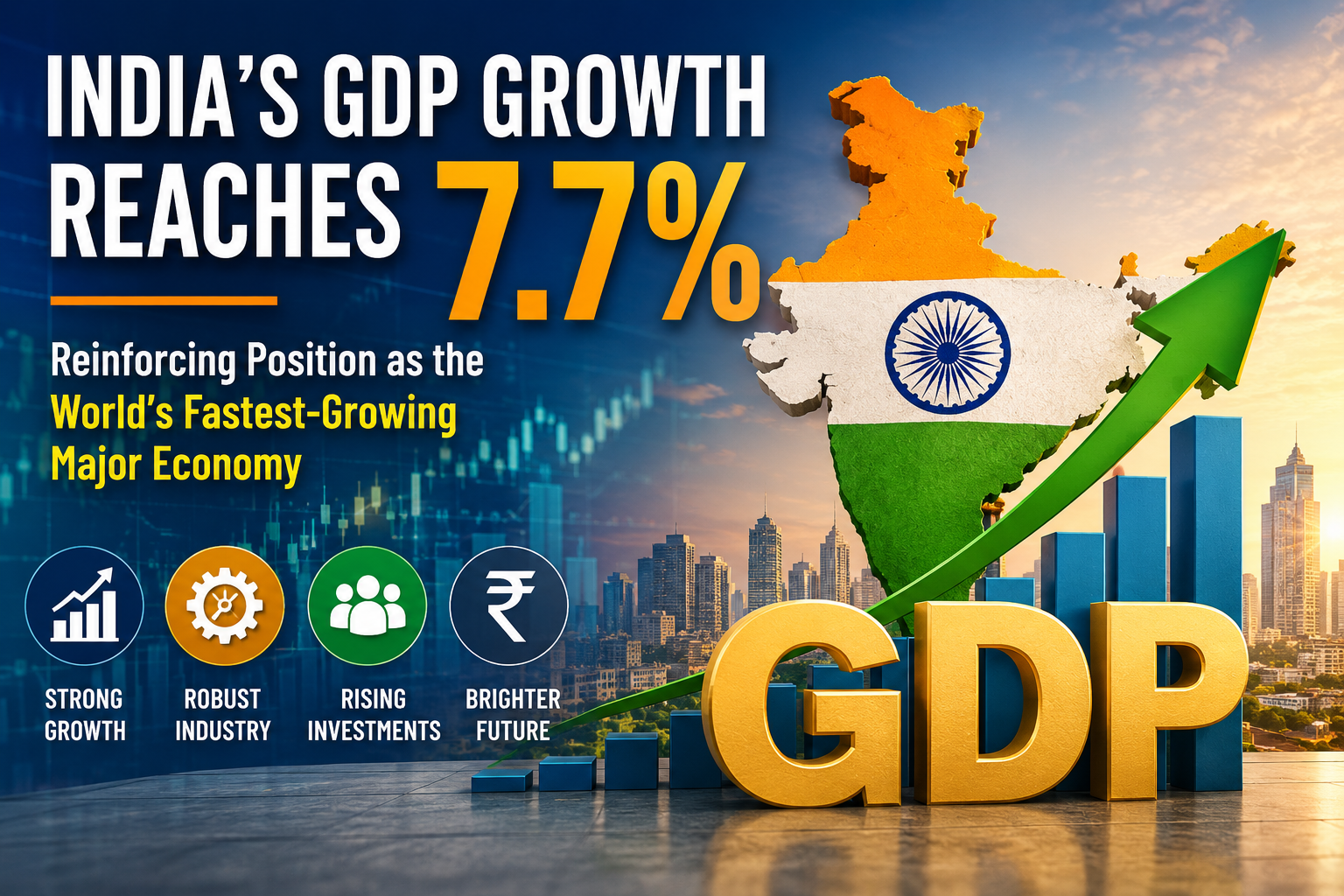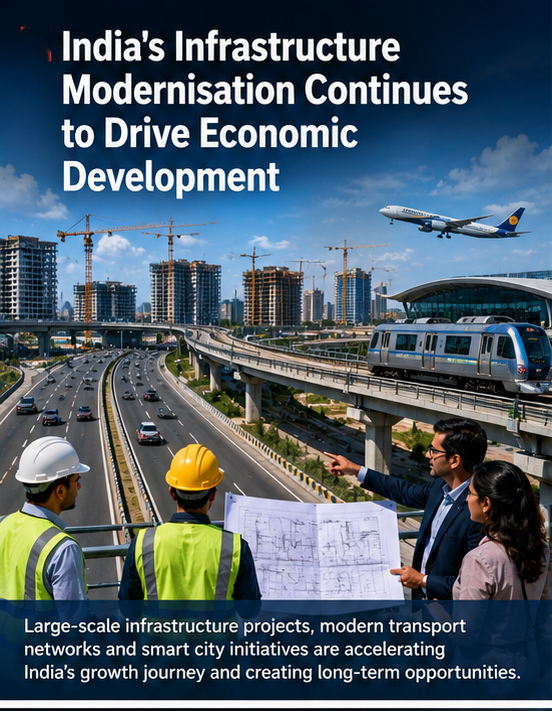
India’s infrastructure sector remains one of the strongest pillars supporting the country’s economic growth in 2026. Large-scale investments in highways, railways, airports, metro systems, logistics hubs, and smart city projects are transforming connectivity and creating new opportunities for businesses and citizens alike.
Over the past few years, infrastructure development has become a central focus of India’s growth strategy. Government initiatives aimed at improving transportation networks and urban infrastructure have accelerated project execution across the country. These developments are helping reduce logistics costs, improve mobility, and attract domestic as well as international investment.
The expansion of metro rail networks in major cities, modernization of airports, and construction of expressways are strengthening regional connectivity. Improved infrastructure is also supporting industrial growth by enabling faster movement of goods and enhancing supply chain efficiency.
Experts believe that infrastructure investments generate a multiplier effect across sectors such as construction, manufacturing, real estate, tourism, and services. These projects create employment opportunities while improving the quality of life for millions of people.
As India continues its modernization journey, infrastructure development is expected to remain a key driver of long-term economic progress and global competitiveness.
Source Link:
https://www.ibef.org/industry/infrastructure-sector-india