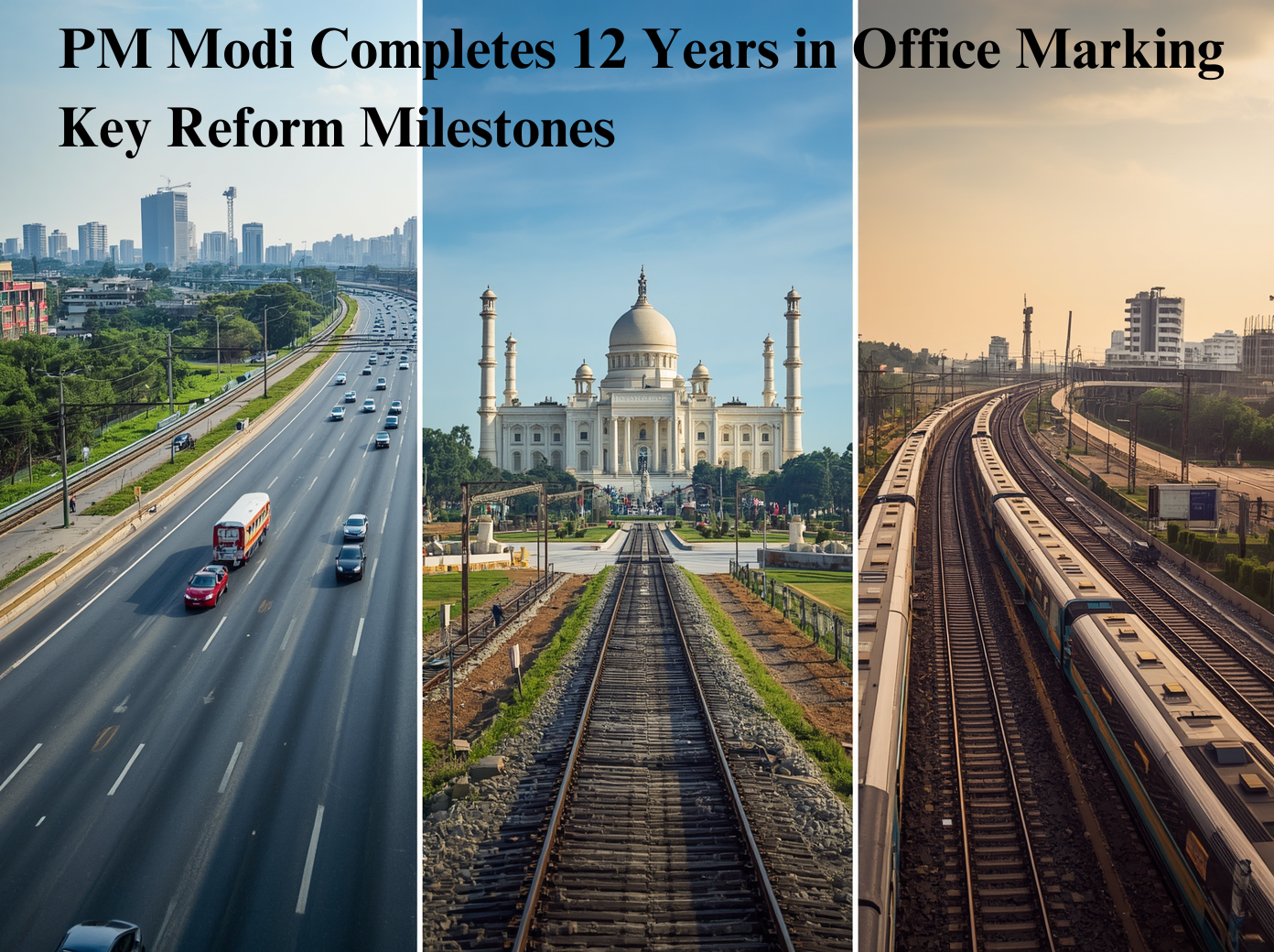
Prime Minister Narendra Modi has completed 12 years in office, marking a significant period of political leadership and governance reforms in India. During this time, the government has introduced several initiatives aimed at strengthening economic growth, improving infrastructure, enhancing digital governance, and expanding social welfare programs.
Over the past decade, India has witnessed major developments in sectors such as transportation, digital technology, financial inclusion, manufacturing, and renewable energy. Large-scale infrastructure projects including highways, railway modernization, airports, and logistics corridors have contributed to improved connectivity and economic activity across the country.
One of the most notable achievements has been the expansion of digital governance. Initiatives such as Digital India, Unified Payments Interface (UPI), Aadhaar integration, and direct benefit transfers have transformed the delivery of public services while increasing transparency and efficiency. These reforms have helped millions of citizens access financial services and government schemes more easily.
Financial inclusion has also remained a key focus area. Programs aimed at expanding banking access, promoting digital payments, and supporting entrepreneurship have contributed to broader participation in the formal economy. Small businesses and startups have benefited from initiatives designed to encourage innovation and investment.
India’s global standing has also evolved during this period. The country has strengthened diplomatic relationships, expanded trade partnerships, and increased its participation in international forums. India’s growing economic influence and strategic importance continue to shape its role in global affairs.
The manufacturing sector has received significant attention through initiatives aimed at boosting domestic production and attracting foreign investment. Efforts to improve the ease of doing business and strengthen industrial capabilities have supported economic growth and employment generation.
Social welfare programs targeting housing, healthcare, sanitation, and rural development have also played an important role in addressing developmental challenges. Government initiatives have focused on improving living standards and expanding access to essential services across urban and rural communities.
The renewable energy sector has emerged as another area of substantial progress. Investments in solar and wind energy have positioned India among the leading countries in clean energy adoption while supporting sustainability goals and energy security.
Political analysts note that the government’s emphasis on infrastructure development, technology adoption, and economic modernization has significantly influenced India’s development trajectory. While policy debates continue on various issues, the scale of reforms introduced during this period has had a lasting impact on governance and economic planning.
As India moves forward, continued focus on innovation, infrastructure, investment, and inclusive growth will remain important in supporting long-term national development. The completion of 12 years in office represents a milestone that highlights both the achievements and future opportunities facing the country.
Source Link:
https://economictimes.indiatimes.com/news/politics-and-nation/