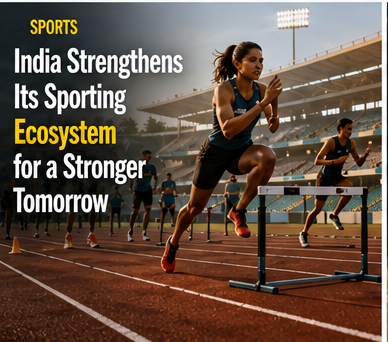
India Strengthens Its Sporting Ecosystem Through Infrastructure Investments and Athlete Development Programs
India’s sporting landscape is undergoing a remarkable transformation in 2026 as increased investment in infrastructure, athlete development, and grassroots participation continues to strengthen the country’s position in international sports. Over the past decade, India has expanded its focus beyond traditional sporting strengths, creating opportunities for athletes across multiple disciplines and fostering a culture of sporting excellence.
The government’s commitment to sports development, combined with private-sector support and growing public interest, has helped create a more competitive environment for athletes. As India prepares for future international competitions, experts believe the current momentum could significantly improve the nation’s sporting achievements on the global stage.
Rising Investment in Sports Infrastructure
One of the key factors driving growth in Indian sports is the expansion of modern infrastructure. New stadiums, training facilities, sports academies, and high-performance centers are being developed across the country.
These facilities provide athletes with access to world-class training environments, advanced equipment, and professional coaching support. Improved infrastructure has become essential for preparing athletes to compete against the world’s best performers.
Several states have also launched initiatives aimed at upgrading local sports facilities, encouraging greater participation at the grassroots level and helping identify future talent.
Government Initiatives Supporting Athletes
The Indian government has introduced multiple programs designed to support athletes and strengthen the sports ecosystem. These initiatives focus on talent identification, financial assistance, coaching development, and international exposure.
Programs such as athlete scholarships, specialized training camps, and performance-based incentives have contributed to improved results in various sporting disciplines. By providing structured support systems, policymakers aim to create pathways for athletes to reach their full potential.
Government agencies continue to work closely with sports federations to ensure that resources are directed toward areas that can generate long-term success.
Growth Beyond Cricket
While cricket remains India’s most popular sport, other disciplines have experienced significant growth in recent years. Athletics, badminton, wrestling, boxing, hockey, shooting, table tennis, and football have all attracted increasing attention.
Indian athletes have achieved notable success in international competitions, inspiring young people to pursue careers in sports. Media coverage and corporate sponsorship have further contributed to the popularity of non-cricket sports.
This diversification is helping build a broader sporting culture and creating opportunities for athletes with different talents and interests.
Role of Sports Academies
Sports academies have become important contributors to athlete development. Many institutions provide specialized coaching, nutrition guidance, fitness programs, and psychological support.
Young athletes benefit from structured training environments that focus on both performance improvement and personal development. The presence of experienced coaches and sports scientists has enhanced the quality of preparation available to emerging talent.
Academies also serve as talent pipelines for national teams and professional leagues, helping identify future champions at an early stage.
Technology Transforms Training Methods
Technology is playing an increasingly important role in modern sports. Data analytics, performance monitoring systems, wearable devices, and video analysis tools are helping athletes improve their skills and optimize performance.
Coaches can now use advanced metrics to evaluate strengths, identify weaknesses, and develop personalized training programs. These innovations have contributed to more efficient preparation and better decision-making.
Sports science is becoming a critical component of athlete development, enabling competitors to maximize their potential while reducing the risk of injury.
Corporate Support and Sponsorship
Private-sector involvement has significantly strengthened India’s sports ecosystem. Companies are investing in leagues, teams, athletes, and development programs as part of broader efforts to support sports growth.
Corporate sponsorship provides financial resources that help athletes access better training facilities, international competition opportunities, and professional support services.
The increasing commercial appeal of sports has also created new career opportunities in areas such as sports management, broadcasting, marketing, and event organization.
Preparing for International Competitions
India’s long-term objective is to improve performance at major international events, including the Olympics, Asian Games, Commonwealth Games, and world championships.
Athletes are receiving greater support in preparation for these competitions through specialized training programs and exposure to international competition standards.
Sports administrators believe that consistent investment in athlete development will enhance India’s competitiveness across a wide range of disciplines.
The focus is not only on winning medals but also on building sustainable systems that support long-term sporting success.
Challenges Facing Indian Sports
Despite significant progress, challenges remain. Access to quality coaching, funding disparities, and uneven infrastructure development continue to affect some regions.
Ensuring equal opportunities for athletes from rural and underserved communities remains an important priority. Sports organizations must also address issues related to governance, talent retention, and long-term planning.
Continued collaboration between government agencies, sports federations, educational institutions, and private organizations will be necessary to overcome these obstacles.
Future Outlook
The future of Indian sports appears highly promising. Growing public interest, improved infrastructure, technological advancements, and increased investment are creating a strong foundation for future success.
Experts believe that continued support for grassroots development and athlete preparation can help India achieve greater success in international competitions while inspiring the next generation of sports talent.
As the sports ecosystem continues to evolve, India is well-positioned to strengthen its presence on the global sporting stage.
Conclusion
India’s commitment to sports development is producing positive results across multiple disciplines. Through infrastructure investments, athlete support programs, technological innovation, and increased participation, the country is building a stronger and more competitive sporting ecosystem.
With sustained effort and strategic planning, India has the potential to emerge as a major force in international sports while creating opportunities for millions of aspiring athletes nationwide.