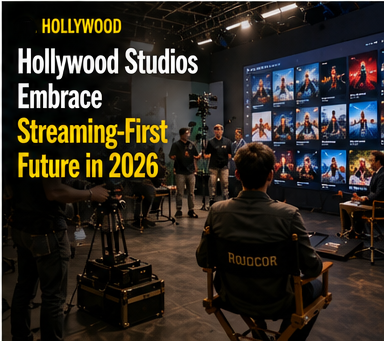
The global entertainment industry is undergoing a major transformation in 2026, and Hollywood remains at the center of this evolution. Major film studios and media companies are increasingly prioritizing streaming-first strategies, investing heavily in digital content, and adapting to changing audience preferences.
Over the past decade, streaming platforms have reshaped how people consume entertainment. Viewers now expect on-demand access to movies, television series, documentaries, and exclusive content across multiple devices. This shift has encouraged Hollywood studios to rethink traditional business models and develop new approaches to content creation, distribution, and audience engagement.
Industry experts believe that streaming services will continue to play a dominant role in shaping the future of entertainment while creating new opportunities for creators, studios, and global audiences.
The Rise of Streaming Platforms
Streaming platforms have become one of the most influential forces in modern entertainment. Consumers increasingly prefer the convenience of accessing content anytime and anywhere through internet-connected devices.
This change in viewing habits has encouraged major Hollywood studios to launch their own streaming services or strengthen partnerships with existing platforms. As competition intensifies, companies are investing billions of dollars in original programming and exclusive content designed to attract subscribers.
Streaming has expanded audience access while creating opportunities for content creators to reach viewers across different countries and cultures.
Changing Consumer Preferences
Audience preferences have evolved significantly in recent years. Modern viewers seek personalized entertainment experiences, flexible viewing options, and diverse content libraries.
Unlike traditional television schedules, streaming platforms allow users to choose what they want to watch and when they want to watch it. This flexibility has contributed to the rapid growth of digital entertainment services worldwide.
Younger generations, in particular, are driving demand for mobile-friendly content and shorter viewing formats, encouraging studios to explore new storytelling techniques.
Understanding these changing preferences has become essential for Hollywood companies seeking to remain competitive.
Investment in Original Content
Original programming has become a key strategy for streaming platforms and film studios. Exclusive movies, television series, documentaries, and limited series help attract new subscribers while retaining existing audiences.
Hollywood studios are investing heavily in high-quality productions featuring well-known actors, directors, and creative talent. These projects often combine cinematic production values with the convenience of digital distribution.
The emphasis on original content has also created opportunities for emerging filmmakers and storytellers to bring innovative ideas to global audiences.
As competition continues to increase, content quality remains one of the most important factors influencing viewer decisions.
Global Audiences Drive Growth
One of the most significant advantages of streaming platforms is their ability to reach international audiences. Hollywood content is now consumed by viewers in virtually every region of the world.
Studios are increasingly developing projects that appeal to global audiences while incorporating diverse cultural perspectives. International partnerships and multilingual productions have become more common as companies seek to expand their global footprint.
This worldwide reach has transformed entertainment into a truly international industry where success is no longer determined solely by domestic box office performance.
Global audience engagement continues to drive revenue growth and content innovation.
Technology Enhances Entertainment Experiences
Technological advancements are playing a crucial role in shaping the future of Hollywood. Artificial intelligence, virtual production techniques, advanced visual effects, and immersive viewing experiences are transforming content creation.
Studios are utilizing sophisticated tools to improve production efficiency while enhancing storytelling capabilities. Innovations in animation, sound design, and digital cinematography have elevated the quality of entertainment content.
Technology is also improving audience engagement through personalized recommendations, interactive experiences, and data-driven content strategies.
These advancements are helping studios better understand viewer preferences and optimize content distribution.
The Future of Movie Theaters
Despite the growth of streaming services, movie theaters continue to play an important role in the entertainment ecosystem. Major blockbuster releases often generate substantial revenue through theatrical distribution before becoming available on digital platforms.
Many studios are adopting hybrid release strategies that balance theatrical premieres with streaming availability. This approach allows companies to maximize audience reach while preserving traditional cinema experiences.
Industry analysts believe that theaters and streaming services will continue to coexist, serving different audience preferences and consumption habits.
The challenge for studios lies in finding the right balance between these distribution channels.
Economic Impact of the Entertainment Industry
Hollywood remains a major contributor to the global economy. The industry supports millions of jobs across production, marketing, distribution, technology, tourism, and related sectors.
Streaming platforms have created additional employment opportunities by increasing demand for writers, directors, actors, editors, visual effects specialists, and digital marketing professionals.
The continued expansion of digital entertainment is expected to generate further economic activity while supporting innovation and creativity.
As the industry evolves, new business models and revenue streams are emerging across multiple segments.
Challenges Facing Hollywood
Despite its strengths, Hollywood faces several challenges. Rising production costs, intense competition among streaming platforms, audience fragmentation, and changing consumer expectations require continuous adaptation.
Studios must also navigate issues related to content saturation, subscriber retention, intellectual property protection, and technological disruption.
Maintaining profitability while investing in high-quality content remains a complex balancing act for many media companies.
Successfully addressing these challenges will be essential for sustaining long-term growth.
Future Outlook
The outlook for Hollywood remains highly positive. Streaming adoption continues to increase globally, creating opportunities for studios to expand their reach and diversify revenue sources.
Advancements in technology, growing international demand, and increased investment in original programming are expected to support continued industry growth.
Experts predict that the future of entertainment will be characterized by greater personalization, global collaboration, and innovative storytelling formats.
Hollywood’s ability to adapt to changing market conditions positions it well for success in the evolving digital landscape.
Conclusion
Hollywood’s embrace of streaming-first strategies reflects the broader transformation taking place across the global entertainment industry. By investing in digital innovation, original content, and international audience engagement, studios are positioning themselves for long-term growth in an increasingly competitive environment.
As technology continues to reshape entertainment consumption, Hollywood remains a leading force in global storytelling, influencing culture, creativity, and media trends worldwide. The industry’s ongoing evolution demonstrates its ability to adapt while continuing to captivate audiences across the globe.